Pick up almost any consumer product and the secondary packaging is the first thing you experience. Before the formula, before the texture, before the scent, there’s the box. Brands invest heavily in what goes inside, but the carton itself often gets finalized last, treated as a logistics detail rather than a brand decision. By the time it gets real attention, the timeline is tight and the creative options have narrowed.
Secondary packaging plays a bigger role in the customer experience than many brands give it credit for. At the point of purchase, the carton has to communicate what the product is and convey quality. Even before that, it needs to hold up through supply chain handling.
How Secondary Packaging Speaks for the Product
A folding carton communicates before the consumer realizes it’s happening. The finish, the weight, and the way it holds its shape on shelf and in customers’ hands all register as a quality judgment before a single word of copy gets read. That’s a lot riding on something that often gets treated as a production afterthought.
Teams that plan secondary packaging early tend to have better branding and spend less doing it. When packaging is part of the conversation from the start, there’s time to evaluate substrate options and align finishing choices with both the brand vision and the production budget.

Where Folding Carton Programs Get Complicated
Most folding carton challenges don’t start on the press. They usually come from previous design decisions that didn’t account for production realities.
– SKU proliferation that requires consistent color across multiple substrates and run sizes
– Regulatory compliance requirements, particularly in pharma and cannabis, that govern panel content and leave little room for design flexibility
– Sustainability targets that affect material selection, coating choices, and supplier qualifications
– Launch timing that forces production decisions before final artwork or component specs are locked
– Retail and e-commerce requirements that sometimes call for different structural configurations of the same carton
Getting a production partner involved early makes most of these easier to work through.
Why Design Decisions Affect the Whole Run
Design and production feel like two separate phases, but in secondary packaging, they’re interdependent. The further into the design process you get without production input, the more constrained the options become on the back end.
Substrate selection is one of the earliest decisions with the longest reach. The board weight and coating on a folding carton affect how it prints, how it folds, how it holds up in a distribution environment, and how it performs against sustainability requirements. A substrate that photographs beautifully in a mockup may behave differently under high-speed folding and gluing, or may not be compatible with a particular finishing process.

There are also structural engineering decisions. The dieline determines how a carton assembles, how securely it closes, and how efficiently it runs through automated packaging lines. A box that requires manual assembly at scale adds cost and time. A structure that doesn’t close cleanly under shelf conditions creates a quality problem that shows up at retail
Structural and material considerations worth locking in before creative is finalized:
– Board weight relative to product weight and distribution method
– Closure type and whether it needs to be tamper-evident or child-resistant
– Compatibility between substrate and planned finishing processes
– Panel dimensions relative to required copy and compliance language
– Assembly requirements and whether the structure supports automated line speeds
Finishing for High-Impact Branding
Finishing is where folding cartons go from functional to memorable. Embossing, foil stamping, soft-touch laminate, spot UV, and textured coatings all change how a carton reads in person. They affect whether a product feels premium or standard before a consumer ever opens it.
Finishing choices have production implications. A soft-touch laminate requires a different substrate than a gloss coat. Foil stamping adds a press pass. Certain coatings aren’t compatible with specific board weights. None of that is prohibitive, but it all affects how long your job takes and what it costs.

If you’re deciding on finishing as a final layer once everything else is settled, your options narrow fast. Bringing it into the structural design conversation early keeps more of them open and cuts down on late-stage surprises.
What to Look for in a Folding Carton Partner
Not every print vendor is built for the complexity that secondary packaging brings. You need a true production partner with the quality and capability to deliver consistently at the volumes and timelines your program requires.
When you’re evaluating partners, look for:
– In-house structural engineering and prototyping, so design and production conversations happen together rather than in sequence
– Category experience in industries where regulatory and sustainability requirements add complexity, including pharma, beauty, and food and beverage
– Quality control systems that maintain color consistency and structural integrity across high-volume runs
– Warehousing, fulfillment and distribution infrastructure, so finished cartons move directly into your supply chain without an additional handoff
If you’re managing multiple SKUs, channels, or markets, working through a single production partner keeps quality standards consistent and takes the coordination burden off your team.
Hatteras produces folding cartons for brands across beauty, wellness, pharma, food and beverage, and retail. We handle structural design, printing, finishing, and fulfillment under one roof. Ready to get your next folding carton program going? Speak with our team today.
Postage is typically the largest single expense in a direct mail campaign. With the USPS continuing to increase rates as part of its “Delivering for America” 10-year plan, managing postage costs has become even more critical for marketers. Brand teams scrutinize creative and production costs at every stage of planning, but postage often gets accepted as a fixed number rather than something to actively manage. For brands running campaigns at volume, the gap between an unmanaged postage spend and a well-structured one can add up fast.
Most of the available savings don’t require cutting back on quality or reach. They come from decisions made earlier in the process around how the team maintains the list, how the designer approaches the piece, and how the mail enters the postal system. Hatteras handles over 150 million mail pieces per year, and the savings our clients capture consistently come from five best practices.
Start with a Clean List
Every piece mailed to a bad address costs postage without any chance of a return. At scale, even a modest percentage of outdated or duplicate records translates into a clear waste of budget. List hygiene is the foundation of an efficient campaign, and its impact on postage is direct.
Three processes work together here:
- 1. CASS (Coding Accuracy Support System) certification standardizes addresses against the USPS database, improving deliverability and qualifying mail for automation discounts.
- 2. NCOA (National Change of Address) processing updates records for recipients who have moved within the past four years, catching one of the most consistent sources of wasted postage.
- 3. De-duplication removes duplicate records before a job goes to print, so you don’t pay to mail the same household twice.
Running all three before every campaign, not just at initial list acquisition, keeps the mailing data current and the postage spend honest.

Design for Postal Automation from the Start
USPS rates reward pieces that move through automated sorting equipment without manual handling. Pieces that fall outside standard size and weight parameters get assessed surcharges that add per-piece costs across an entire run.
Standard letter and flat sizes generally qualify for the lowest automation rates. Square envelopes and oversized formats often trigger non-machinable surcharges. A self-mailer with a creative fold can achieve a distinctive presence while staying within automation-friendly dimensions. A large flat envelope carrying the same design might cost noticeably more to mail.

Weight is the other variable most brands underestimate. Paper stock choices and insert counts affect postage class. Even small adjustments to substrate weight can move a piece from one rate tier to another. A print and mail partner brought into the design conversation early can identify those implications before creative is locked, when changes are still inexpensive to make.
For example, when Spark44 was developing its Faces of Jaguar campaign, Hatteras evaluated finishing options well before production was locked. The conversations that happen before a design is final consistently cost less than the ones that happen after.
Drop Ship Closer to the Destination
Standard mail enters the postal stream at a local processing facility and travels through the USPS network to reach its destination. Drop shipping bypasses part of that journey by delivering presorted mail directly to the postal facility closest to where recipients actually are. The shorter the distance USPS has to move the mail, the lower the postage rate.
For national or regional campaigns, drop shipping to multiple destination entry points, called SCFs (Sectional Center Facilities) or DDUs (Destination Delivery Units) in postal terminology, can generate notable per-piece savings. The logistics require more coordination though, since mail has to be sorted, palletized, and transported to multiple facilities. A print and mail partner with established distribution infrastructure handles that complexity without it landing on the brand team.

Presort for Bulk and Automation Discounts
USPS offers lower rates for mailers who sort their mail by zip code before it enters the postal stream. Presorting allows USPS to skip their own sorting step, and the savings get passed directly to the mailer. The more finely sorted the mail, the deeper the discount available.
Accessing presort discounts requires meeting USPS volume minimums and working with a USPS-certified mailer who can manage the sortation process. Hatteras holds USPS mail service provider (MSP) certification and manages presort across the campaigns it handles, which means clients access the deepest available rates without managing postal logistics in-house.

Take Advantage of USPS Promotions and Incentives
USPS runs annual promotions that offer postage discounts for mailpieces incorporating specific features. Discount amounts can run up to 5%, and applied across a large campaign, the savings add up quickly.
Active promotions have included discounts for pieces that incorporate tactile or sensory finishes, as well as incentives for Informed Delivery campaigns, where USPS emails recipients a digital preview of incoming mail before it physically arrives. Mobile shopping integrations tied to the physical piece have also qualified in recent cycles.
Promotions change year to year, carry specific eligibility requirements, and require enrollment before a campaign mails. Brands that aren’t tracking the current promotional calendar miss discounts that are fully available with advance planning.
Where the Savings Compound
Each of these levers delivers savings on its own. The compounding effect comes from applying all five to the same campaign:
– A clean list eliminates wasted postage at the unit level. –
– Automation-friendly design keeps the base rate as low as possible. –
– Presort discounts reduce the rate further. –
– Drop shipping to destination entry points adds another layer of savings. –
– USPS promotions reduce the rate on top of everything else. –
A recent MagnaCare campaign shows what close coordination looks like. Variable data, personalization, and a tight turnaround required Hatteras and MagnaCare to work together from the earliest planning stages, not just at the production handoff. As Bryan Irland, VP of Marketing at MagnaCare, put it: “Hatteras is not just our printer, they are our partner.” Postage optimization works the same way. It happens at the planning stage, not after the campaign is already in motion.
Ready to get more out of your next direct mail campaign?
Hatteras manages the full process from list hygiene and design consultation to presort, drop shipping, and USPS promotion enrollment. With over 150 million mail pieces processed annually, we know where the savings are and how to capture them. Start your project today.
In pharmaceutical marketing, healthcare providers and patients require different language and separate regulatory review tracks. The marketing collateral program supporting a single drug can span a dozen materials, produced on overlapping timelines, subject to approval processes that don’t always cooperate with launch dates.
Most industries treat print collateral as a supporting piece. But in pharma, it’s highly contextual. A field rep walking into a physician’s office needs materials that are accurate and clinically credible for a conversation that might last ten minutes. A patient starting a new therapy needs information that’s clear and reassuring at what is often an anxious moment. Getting both of those things right, consistently, across a full program, is harder than it looks from the outside.
Why Pharma Collateral Is a Category of Its Own
Few industries carry the production and compliance weight that pharmaceutical marketing does. Every piece of collateral operates within a regulatory framework and must have the most current approved language before it ships. For many materials, that means clearing internal and external review cycles that run right up against production deadlines.
A brochure that goes out of date the week after a label update is both wasted budget and a compliance liability. A patient kit assembled with the wrong co-pay card insert erodes the brand experience at the exact moment a patient is deciding whether to begin treatment. The stakes attached to accuracy and version control are concrete operational realities in this industry, not abstract concerns. Knowing which materials serve which purpose and what each one demands in production is where a well-run brand program starts.
Materials That Support the HCP Conversation
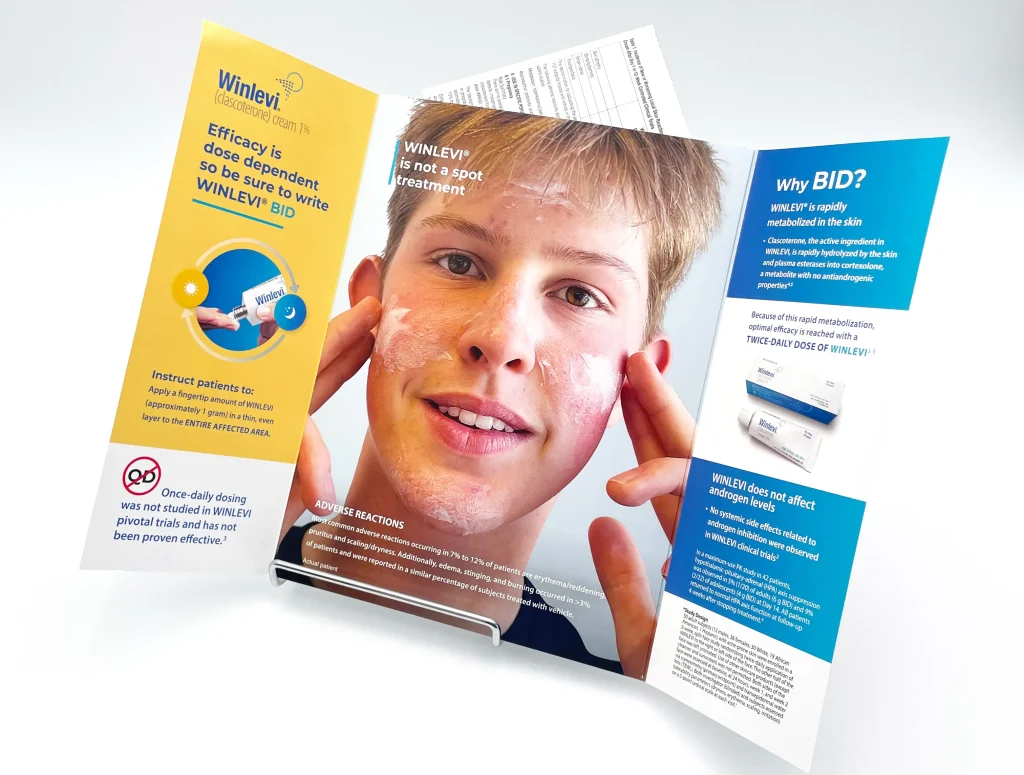
A sales representative typically has a limited window with a physician or specialist. The materials supporting that conversation have to hold up to clinical scrutiny and move things forward, all without overstating what the data supports. HCP-facing collateral is precision work.
Sales Aids and Detail Aids
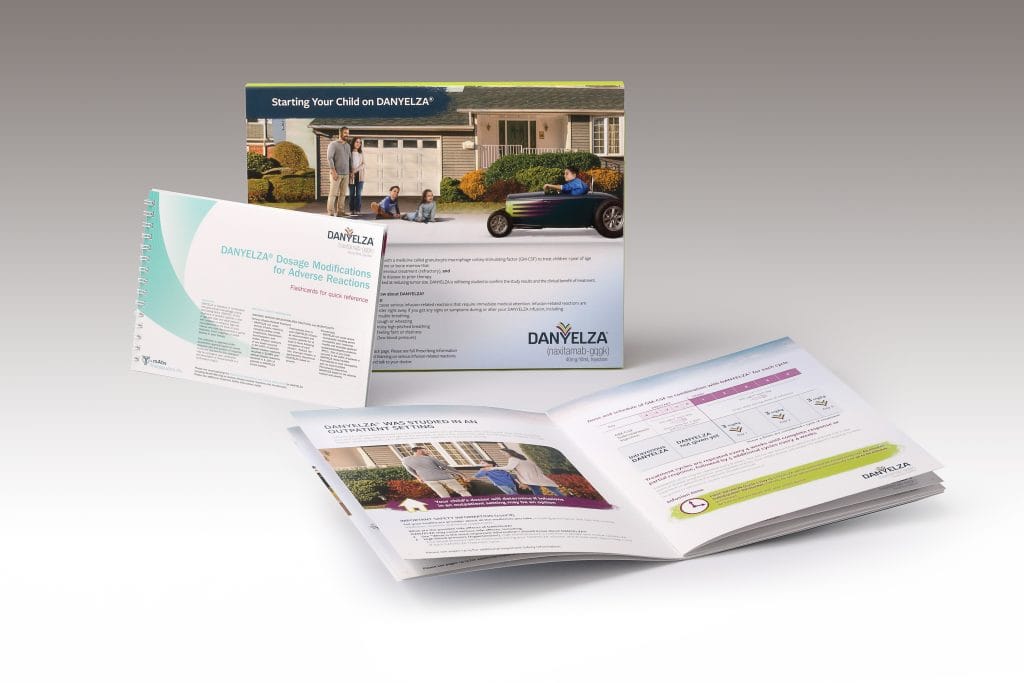
Detail aids are the primary tool a field rep uses during a physician visit. A well-constructed detail aid carries the conversation in a logical sequence: the disease state, the unmet need, the mechanism of action, clinical data, and the call to action. Visual hierarchy and chart quality influence how effectively the rep can guide that conversation, as does the physical format of the piece itself.
Digital formats and modular leave-behind components have expanded what detail aids can do, but the underlying requirement is still clinical accuracy, paired with a structure that doesn’t waste the limited time a rep has in the room.
Dosing Guides and Dosage Aids
For complex therapies with titration schedules or weight-based dosing, a dosing guide is an important resource that lives in the exam room long after the sales visit ends. The job of a dosing guide is quick reference. When a physician is about to write a prescription, the piece has to answer the relevant question immediately, in a format that doesn’t require hunting for information.
Medical and Educational Brochures
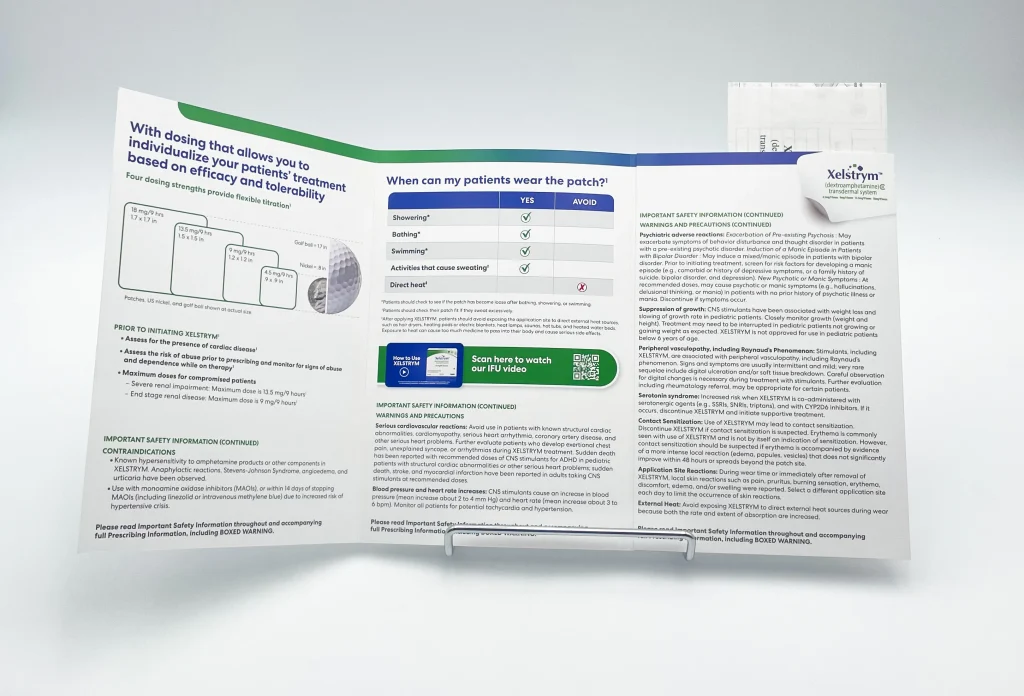
Educational brochures give HCPs a deeper resource for understanding a therapy’s mechanism of action and its place in the clinical evidence base. Unlike a detail aid, a medical brochure doesn’t have to move at the pace of a sales conversation. It can carry more information and support clinical decision-making over time, functioning as a reference that gets consulted between visits. The challenge is balancing depth with readability. A document that reads like a journal abstract rarely gets picked up a second time.
Prescribing Information
Prescribing information (PI) is the official FDA-approved documentation accompanying a drug, and it carries the full weight of regulatory authority. PIs document everything from approved indications and dosage guidance to contraindications and adverse events. They are not marketing materials in the traditional sense, but production and distribution are still part of every brand program. Their production requirements are governed by labeling regulations and leave no room for variation in folding specs or print density.
What makes HCP-facing materials effective as a set tends to come down to a few consistent factors:
- Clinical accuracy that can withstand scrutiny from a skeptical prescriber
- Language that respects the physician’s intelligence without burying the key message
- Formats sized and structured for how HCPs actually interact with them, in brief moments and often on the go
- A version control process that keeps all materials current across label updates and indication changes
Materials That Support the Patient Journey
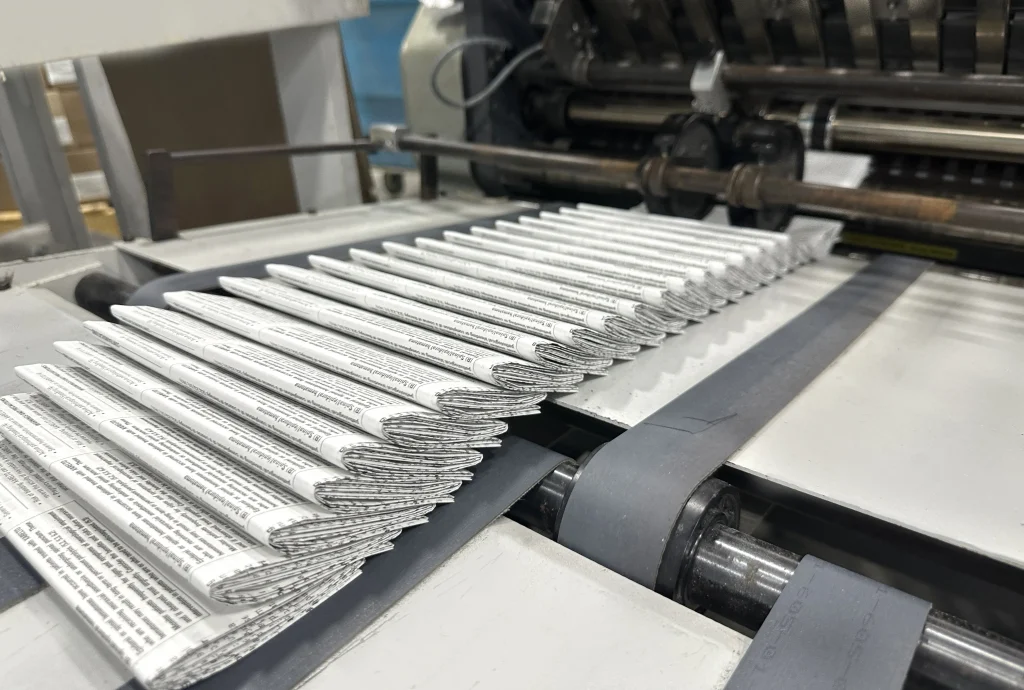
Patients encounter branded pharmaceutical materials at nearly every stage of treatment, from starting a new therapy to navigating cost barriers at the pharmacy counter. Each touchpoint calls for a different kind of communication, and the materials produced for those moments have to earn attention through clarity.
Patient Starter Kits and Welcome Kits
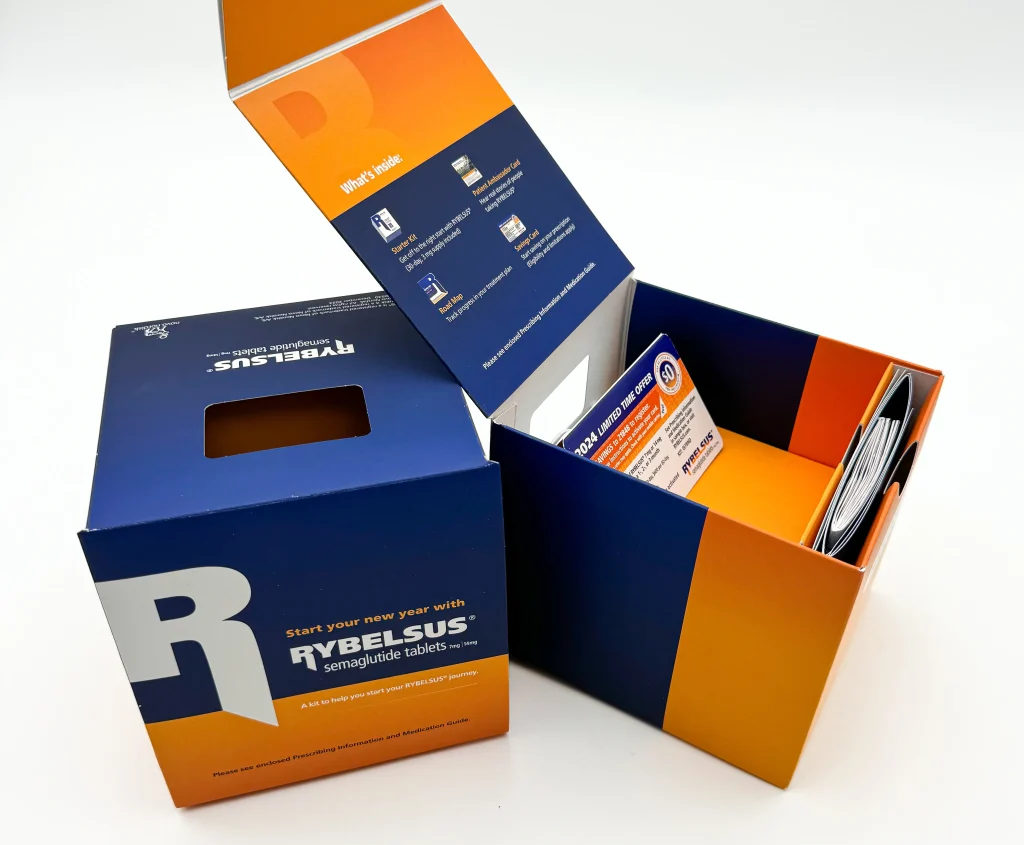
A patient starter kit is typically provided through a physician at the point of prescribing, often including a starter supply of the medication along with educational materials and the supporting tools designed to help a patient begin treatment with confidence. A well-constructed starter kit signals that the brand has invested in the patient’s experience beyond the transaction itself.
Some starter kits involve a small number of components. Others include a medication supply, an educational booklet, a co-pay card, a symptom tracker, and specialty items like an applicator or storage case. Each configuration requires precise kitting to ensure every patient receives the correct version.
Tearpads
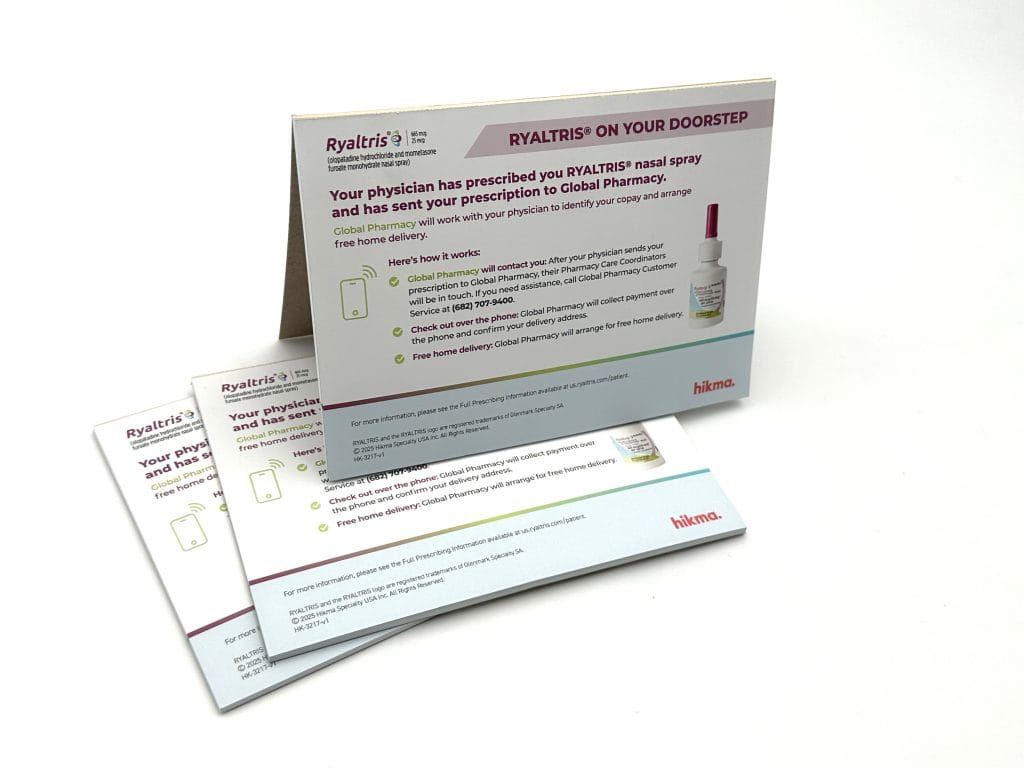
Tearpads are among the most useful pieces in the pharma collateral toolkit. Placed in exam rooms or waiting areas, they give patients something concrete to take home and reference later: dosing reminders and disease education, or a list of questions to bring to the next appointment. Designed for quick consumption and easy distribution, their value is directly tied to how clearly they communicate a single, focused piece of information. A tearpad that tries to cover too much stops functioning as a quick-reference tool.
Patient Package Inserts and Medication Guides
Patient package inserts and medication guides are FDA-mandated materials written in plain language for patients, covering safe and effective drug use and the associated risks. Unlike prescribing information, which is written for healthcare professionals, PPIs and medication guides are written for the person taking the medication. Regulatory requirements govern their content and distribution, and accuracy is non-negotiable. Both are produced in high volumes and frequently updated alongside labeling changes.
Co-pay and Savings Cards
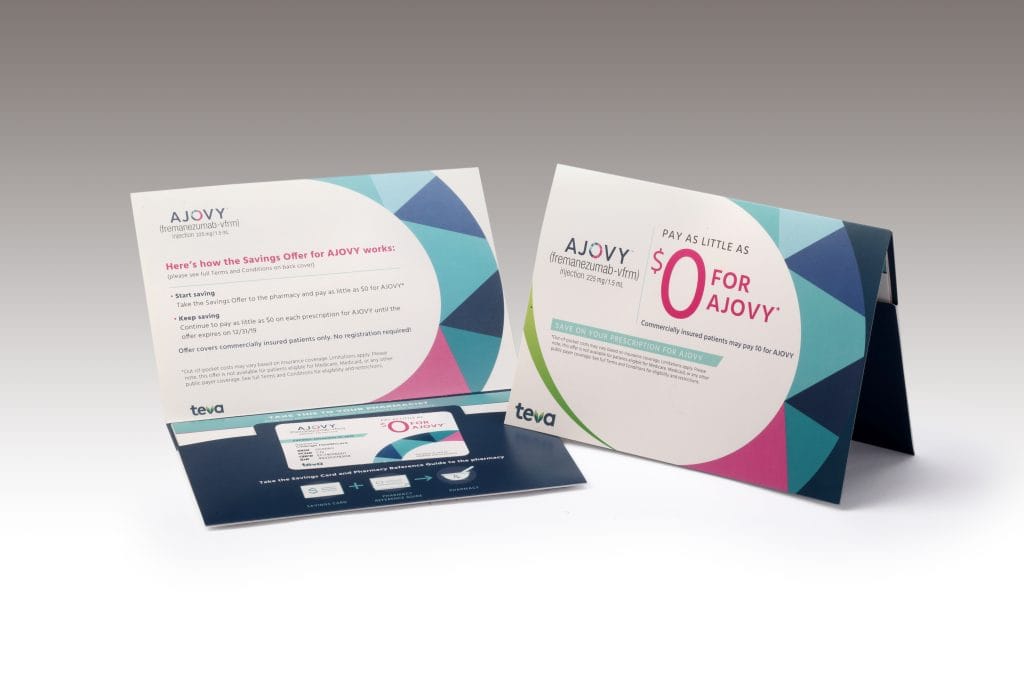
Cost is one of the most common reasons patients abandon or delay filling a new prescription. Co-pay and savings cards directly address that barrier by reducing out-of-pocket expense, helping branded medications remain accessible when lower-cost alternatives exist. The card has to communicate program terms clearly and hold up physically through the patient’s use of it at the pharmacy counter, while integrating cleanly into whatever kit or detail aid it accompanies.
A few considerations that pharma brand teams consistently navigate when building patient-facing collateral programs:
- Regulatory review timelines that affect when materials can be finalized and sent to production
- Version management across large distribution networks, where outdated materials reaching patients can create safety and compliance concerns
- Kitting configurations that need to stay consistent across thousands of assembled units
- Variable data requirements for personalized inserts or segmented campaign materials
- Distribution coordination that ties to launch timing and formulary milestones
The Production Considerations That Set Pharma Apart
Knowing which materials a program needs is one challenge. Getting all of them produced correctly and delivered in the right quantities at the right time is a different one entirely.
Pharmaceutical collateral programs introduce production variables that most other industries don’t face. Label updates and regulatory approvals rarely arrive on a convenient schedule. A brand team may be working from approved creative while the final prescribing information is still in review, which means production decisions around format and quantity have to be made under uncertainty. Print-at-risk scenarios, where production begins before final regulatory signoff to meet a launch date, require a production partner that understands both the process and the exposure.
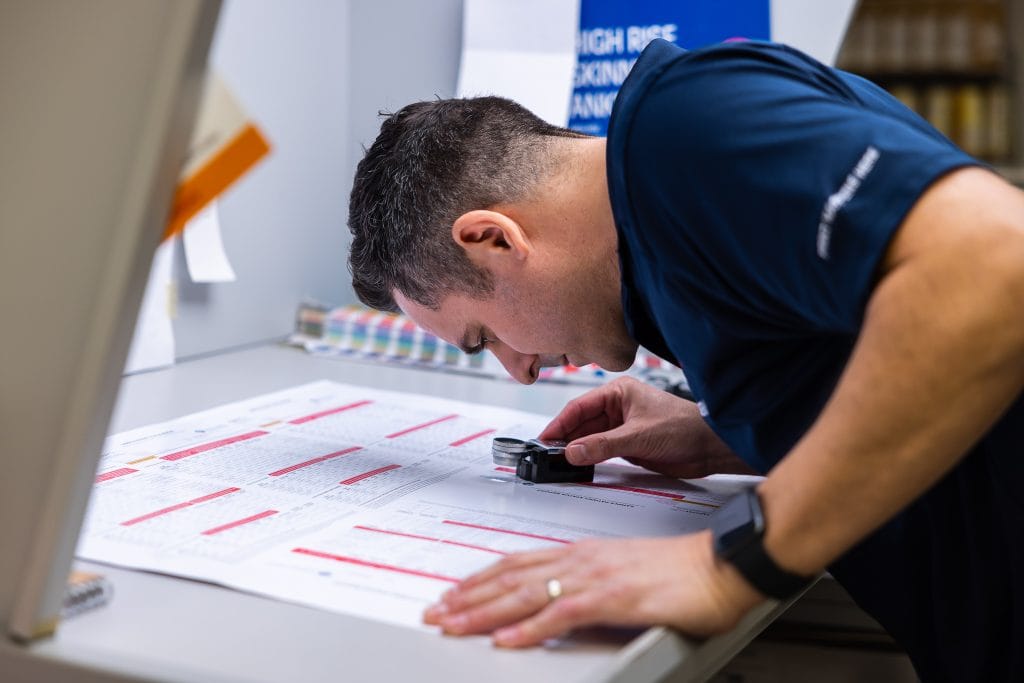
Version control is a persistent operational concern. When a label is updated or an indication changes, every piece of HCP and patient collateral that references affected language needs to be identified and pulled from distribution before a replacement version ships. In a program managing dozens of material types across hundreds of distribution points, that process has to be systematic. Informal tracking creates gaps, and gaps in pharma collateral management carry real risk.
Launch timing adds another layer. Day-one delivery expectations for a new drug launch mean that materials have to be fully produced and quality-checked before a date that may shift more than once during the planning cycle. The burst capacity to absorb those changes without degrading quality or accuracy is not a given across all print and fulfillment providers.
For brand teams evaluating production partners, the questions to ask go beyond price and turnaround time.
How does the partner manage regulatory-driven reprints? What does their version control process look like? How do they handle kitting configurations that require precise assembly across high volumes? Do they hold the certifications pharmaceutical brands require, including HIPAA compliance and ISO 9001 certification?
The pharmaceutical printing and fulfillment capabilities a brand team relies on need to hold up under those conditions, not just the straightforward ones.
Before an influencer talks about your product, they first experience it. When you send an influencer seeding kit, that initial unboxing moment sets the tone; shaping their perception and ultimately influencing how they introduce your brand to their audience.
The way the box opens. How the product is positioned inside. The details included alongside it. Each of those decisions influences how the moment unfolds on camera and how the product is introduced to viewers.
An influencer seeding kit, often called a PR box, is a curated package designed to generate organic social media buzz. Unlike a standard shipment, it’s built around the art of presentation. The structure, materials, inserts, and finishing touches work together to create an intentional showcase that translates naturally into shareable social content. When every detail is thoughtfully considered, the unboxing becomes a moment worth capturing. Here are five tips for designing a memorable unboxing experience:
See an Unboxing Experience in Action
1: Design the Packaging Around Your Product and Brand Identity
The most effective influencer seeding kits feel authentic. If the product represents simplicity and refinement, the packaging might echo that tone through clean structure and restrained graphics. If the brand is expressive or playful, structural creativity and color can carry that energy forward. Alignment is what makes the experience feel cohesive instead of staged.
Structure is often where differentiation begins. A magnetic closure, a gatefold opening, or a layered reveal can slow the interaction down. The pause creates anticipation and gives the influencer space to react. A thoughtful opening sequence translates naturally into better content because it encourages exploration rather than rushing to the product.
Material and finish reinforce perception. A soft-touch laminate changes how the box feels immediately. Raised spot coatings catch light subtly as the packaging moves in frame. Textured stocks or embossed elements add dimension without overwhelming the design. These are quiet signals, but they absolutely influence perception.
Prototyping helps ensure that structural ideas work beyond a flat design file. A box may look compelling digitally but feel awkward in hand. Testing structure and finish combinations allows you to refine the experience before committing to full production. When the physical form ties directly to your brand identity, the unboxing carries that sense of authenticity.
2: Make Your Product the Star
Influencer seeding kit packaging should support the product, not compete with it.
An overly complex design can distract from what the kit is meant to showcase. The product should be the focal point the moment the lid lifts. Visual hierarchy, controlled use of color, and balanced white space guide attention strategically.
Custom inserts are useful here. A precisely engineered tray can hold the product securely and position it exactly where it should be. The product should not shift during transit or sit loosely inside the box.
Layered compartments can add an element of discovery without overwhelming the reveal. The first layer might present the hero product. Secondary layers can hold supporting items, instruction cards, or campaign materials. Each layer becomes a beat in the experience, extending the filming time and facilitating commentary.
Camera considerations matter as well. Influencers frequently film from above or at slight angles. If the product branding is visible immediately and remains secure as the box tilts, it’s more likely to appear clearly in content.
3: Personalize the Experience
Influencers receive shipments regularly. Personalization is often what separates one box from another. A note addressed directly to the recipient changes the emotional tone instantly. A brief explanation of why the product aligns with that specific creator demonstrates effort. Referencing their niche or recent content builds credibility and signals that outreach was thoughtful.
Personalization doesn’t necessarily require handwritten notes for every kit. Variable data printing allows brands to tailor inserts at scale. Your messaging can shift slightly depending on the influencer’s audience, content focus, or campaign segment. The product remains consistent, but the framing becomes relevant. When influencers feel that a product speaks to their audience on its own, their coverage tends to feel less transactional.
Behind the scenes, personalization does add complexity. Address management, insert matching, and segmented configurations require careful coordination, ideally from your production partner to streamline the process. An organized kitting and fulfillment process can help ensure each influencer receives the correct version without errors.
4: Make It Camera-Friendly
Influencer seeding kits live on camera. Every design choice should account for how the product will appear through a lens.
Clean interior layouts typically perform better than crowded ones. When too many elements compete in the frame, the product can lose impact. Negative space allows attention to settle.
Color contrast influences clarity. If the product blends into the background, it becomes harder to capture effectively. Strategic contrast helps the item stand out in both photos and short-form video. Matte finishes reduce glare under bright lighting, while selective gloss elements can add depth without overpowering the image.
Your brand handles and campaign hashtags should be visible yet unobtrusive. Placement inside the lid or along an interior edge keeps tagging intuitive. Influencers are more likely to include brand references when they are easy to find and aesthetically integrated.
The vertical orientation of social media brings additional considerations. Most creators shoot in portrait orientation, so you’ll want to make sure your key branding and structural features are visible from that perspective. Opening mechanisms should feel smooth so the recording doesn’t stall mid-motion. When the kit functions almost like a built-in set, it supports the creator rather than complicating their workflow.
5: Keep It Functional
With influencer seeding kits, ease of use is fundamental. The box has to open smoothly. Internal components should be intuitive to navigate. Influencers do not want to struggle to access the product while recording.
Protection during transit is equally important. Structural integrity and secure inserts can protect products so they arrive in perfect condition, while thoughtful engineering can minimize movement without relying on excessive filler materials.
Sustainability considerations now influence brand perception across many industries. Recyclable materials, reduced plastic components, and efficient structural design communicate awareness. A premium experience does not require unnecessary waste. In many cases, streamlined packaging feels more refined.
Including a concise note about recycling or disposal can add credibility. It signals that environmental impact was part of the planning process. Overall, balancing aesthetics, durability, and responsible material use requires careful design decisions best left to professionals.
From Concept to Coordinated Fulfillment
Designing an influencer seeding kit is one challenge. Producing and delivering it consistently is another. Campaigns often involve segmented personalization, evolving address lists, and coordinated launch timing. Production schedules must align with outreach plans. Assembly must remain consistent across every kit. Shipping must be organized so that influencers receive packages when expected.
A coordinated packaging and fulfillment system brings structural design, specialty finishing, variable printing, precise kitting, and organized distribution together. Visibility into inventory and shipment status adds confidence to the rollout.
When concept and execution align, the unboxing unfolds as intended. The product is positioned correctly. Personalization is accurate. The structure performs smoothly. The influencer can focus on promoting your product and brand.
Frequently Asked Questions
What makes a successful influencer seeding kit?
A successful influencer seeding kit combines brand-aligned structural design, product-focused presentation, thoughtful personalization, camera-friendly packaging, and reliable fulfillment. Each element contributes to how the unboxing translates into organic content.
What is the difference between a PR box and an influencer seeding kit?
The terms are often used interchangeably. Both refer to curated packaging designed to introduce products to content creators in a way that encourages social sharing. “Seeding kit” emphasizes strategic distribution, while “PR box” is a more general industry term.
How important is packaging in influencer marketing?
Packaging plays a significant role because it shapes the first physical interaction with the product. A well-designed unboxing experience increases the likelihood of longer, higher-quality content and stronger audience engagement.
Can influencer kits be sustainable?
Yes. Structural efficiency, recyclable materials, and reduced plastic components allow brands to create premium experiences while aligning with audience sustainability expectations.
Creating the Moment That Gets Shared
The unboxing moment is brief, but its influence extends well beyond that first reaction. It shapes perception, creates discussion, and determines how the product enters the broader conversation. If you’re planning your first (or next) influencer seeding kit, Hatteras can help translate your creative vision into packaging that holds up in transit and performs on camera. Speak with our team today.
Editor’s Note (Updated for 2025): Influencer seeding continues to evolve. We’ve added the latest trends, data, and insights below to help you stay ahead this year.
Authenticity is top of mind for most companies and marketers today, and for good reason. 90% of surveyed consumers said that authenticity is important to them when they’re deciding which brands to support. But what exactly is authenticity and, more importantly, how can businesses build it into their branding?
One answer is influencer seeding. Influencer seeding is when companies send free products to online influencers in exchange for honest reviews, features, or mentions on their platforms. Influencer seeding can extremely effective, particularly with younger generations.
A big part of this success, however, hinges on whether you can create a unique and memorable unboxing experience with your packaging. With custom-designed packaging, influencer seeding kits can help businesses form more authentic connections with their customers, develop long-term partnerships, and foster creative collaboration with influencers. All of this leads to a more personable, authentic brand identity.

Custom Packaging in Influencer Seeding Kits
While product seeding is an extremely effective tactic on its own, many overlook the importance of using custom-designed packaging to elevate the experience for the influencer and their audience. Packaging is what will help your seeding campaign stand out, starting with a strong first impression.
Captivating First Impressions with Packaging
As the first point of contact, packaging lays the foundation for an influencer’s experience with the product. By extension, it also sets the stage for their audience’s experiences and opinions. Unique designs, eye-catching features, and creative packaging elements can help ensure your seeding kit is captivating from the start.

Reflecting Brand Values and Story
When it comes to forging authenticity into your brand identity, the “why” is more important than the “what” and the “how”. Custom packaging provides businesses with an opportunity to communicate their values, their brand story, and why they do what they do. If you’re looking for a way to connect more personally with your customers, this is essential.
Enhancing Perceived Value
Influencer seeding kits are already fun but well-designed packaging can also enhance the perceived value of the products inside them. With materials and finishes that reflect your brand identity, and attention to detail, packaging can communicate a sense of luxury, earthy connection, or anything in between.
Crafting Unboxing Experiences
Memorable unboxing experiences are invaluable in seeding kit marketing. At their core, influencers are seeking to entertain their audiences with interesting or unique experiences. By incorporating unexpected elements, personalized messaging, and unusual presentation techniques, brands can create an unforgettable unboxing experience for the influencer and their audiences. At the same time, this helps brands solidify the impression that they are in tune with their consumers, giving more credence to their appeal to authenticity.
The Power of an Impactful Influencer Seeding Kit
While creating outstanding first impressions and telling a story are all essential factors for portraying a more authentic brand, influencer seeding kits have the ability to take things a step further by doing one simple thing: connecting with individuals.

Developing Authentic Connections with Influencer Seedings
Influencer seeding kits are more than a strategy. It’s an opportunity to build authentic, lasting connections with influencers, their fans, and your wider consumer base as a whole. Researching and identifying the right influencers for your product can not only ensure you’re reaching the right demographics, but it can enable you to customize the experience to the influencer themselves for a more lasting connection.
Creating Long–Term Partnerships and Organic Brand Advocacy
Seeding kits are usually not a one-time interaction; they are the starting point of longer-term relationships and collaborations. By consistently delivering high-quality, personalized, and thoughtfully designed kits, brands can demonstrate their commitment to the influencer’s success. Trust and loyalty can then be nurtured through transparent communication. Once in place, this trust and loyalty can lead to organic brand advocacy.

Fostering Collaborative Creativity with Influencers
Influencers have their own unique perspectives, ideas, and skills. By forming deeper connections and nurturing long-term relationships, brands can tap into these ideas by sparking collaborative conversations with influencers. By asking for input, accepting feedback, and incorporating influencer insights, brands can refine their products, campaigns, and marketing.
The end result is deeper conversations, more meaningful engagement, and enhanced brand loyalty, all built on the foundation of authentic connection.
Influencer Seeding Kit Trends in 2025: What’s Working Now
As influencer marketing matures in 2025, influencer seeding kits have become a core strategy for brands seeking authentic engagement, product launches, and deeper brand affinity. Below are the most important trends shaping this space right now!
Some of our recent influencer seeding kits:


Personalized Packaging and Unboxing Experiences Drive Shareability
Custom packaging and memorable unboxing moments are now essential. Brands are investing in unique, high-quality packaging, personalized notes, and a theme-based creative presentation to make seeding kits irresistible for influencers to share. This not only enhances perceived value but also strengthens the emotional connection between brand and influencer.
90% of consumers say authenticity is important in deciding which brands to support, and custom packaging helps brands communicate their story and values. Aspire’s guide to influencer strategies notes that personal touches—like exclusive items or handwritten notes—significantly increase the likelihood of organic sharing, even when there’s no formal posting requirement.
Micro-Influencers and Nano-Influencers Lead the Way
Brands are shifting budgets from celebrity endorsements to curated lists of micro- and nano-influencers. These creators offer higher engagement, more trust, and better ROI—especially when seeding kits are tailored to their interests and audiences.
According to the Influencer Marketing Benchmark Report 2024, nano-influencers now make up 75.9% of Instagram’s influencer base, and 44% of marketers report their highest ROI comes from partnerships with nano- and micro-influencers. These creators are also increasingly valued for credibility and selectivity in the partnerships they take on, as emphasized in Stack Influence’s roundup of top micro-influencer strategies.
Full-Funnel Impact & ROI Tracking
Seeding campaigns are no longer just about building awareness—they’re now tied directly to performance. More brands are using affiliate-style links, QR codes, and conversion tracking to measure the real business impact of gifted kits.
In fact, CoaxSoft reports that 89% of marketers now say influencer ROI surpasses other channels, with some campaigns delivering up to a $20 return for every $1 invested. As a result, performance-based deals and commission-driven partnerships are on the rise, giving brands more control and giving influencers more incentive to drive measurable results.
Rise of Long-Term Partnerships and Community Building
Instead of one-off seeding drops, more brands are building ongoing relationships with creators who truly align with their values. These long-term partnerships result in more authentic content, better creative collaboration, and stronger loyalty.
Aspire and Influencer Marketing Hub both highlight that nearly half of marketers in 2025 are prioritizing long-term influencer partnerships over single campaigns. This approach builds trust, fosters community, and creates consistent brand advocacy.
Short-Form Video and Unfiltered Storytelling Dominate
Short-form video continues to outperform static content across nearly all platforms. TikToks, Reels, and YouTube Shorts are now the preferred formats for influencer seeding content—and the unboxing moment is often the centerpiece.
According to Stack Influence, short-form video is the most effective way to showcase the kit experience. Brands that give creators room for spontaneous storytelling—especially during that first open—are seeing higher engagement and more conversions.
Build Authentic Connections with Custom Packaging From Hatteras
Influencer seeding kits are invaluable when companies are looking to build a more authentic brand image. When paired with the impactful capabilities of custom-designed packaging, seeding kits can lead to deeper, more lasting relationships with influencers and a deeper connection with their customer base as a whole.
At Hatteras, we develop visually engaging packaging solutions that are custom-tailored to fit your product and your brand image. With our in-house printing capabilities, mailing and data services, and custom fulfillment, we work closely with you from conceptualization and prototyping to production and delivery to ensure the highest quality, eye-catching packaging. Ready to create something incredible? Connect with our team today to get started.
Packaging needs to be more than aesthetically pleasing in the world of folding cartons. It also needs to protect the contents. This means creating the perfect balance between appearance and functionality.
Let’s look at some key considerations for ensuring the structural integrity of your next folding carton package.
Material Durability and Strength
The choice of materials is at the heart of every structurally sound folding carton packaging. Consider factors such as compression resistance, puncture resilience, and moisture protection. Opt for high-quality, sturdy materials that align with the product’s size, shape, and weight and the environmental conditions to which it might be exposed (heat, humidity, extreme temperatures).

Hatteras’ Director of Structural Innovation & Design, Jared Jones, says “A critical detail in folding carton package design is grain direction – something that packaging printers should be aware of and, if neglected, can have a dramatic impact to end use performance.”
Weight Distribution and Load-Bearing Capacity
Understand the weight distribution of the packaged product and its impact on the carton structure. This means carefully assessing the load-bearing capacity of the chosen carton design, ensuring that it can withstand the product’s weight during storage, transportation, and handling. Certain products may need reinforcement mechanisms and strategic folding configurations to distribute the weight and prevent structural deformation.
Functional Ergonomics and User Handling
Consider the end user’s needs to ensure ease of handling and product accessibility. How will the packaging be opened? How will the product be removed? Ensure intuitive opening and closure, convenient product placement, and, if necessary, ergonomic grip features that facilitate a positive user experience.

Dimensional Precision and Fit Accuracy
Make sure the product is securely enclosed. Consider all of the product’s dimensions, add in any necessary support structures (such as paperboard rings around bottles or tubes), and ensure a snug and precise fit that prevents unnecessary movement and potential damage.
Structural Reinforcements and Sealing Mechanisms
Not only does the packaging need to withstand handling, but it needs to withstand the rigors of transportation and distribution. Will you need to incorporate reinforced edges, corner protections, and secure sealing methods, such as adhesive bonding or tamper-evident closures, to protect the packaging from manufacturing to the shelf?

Folding carton packaging is a marvel of design creativity and structural engineering. With a little planning, you can ensure that your packaging designs are beautiful and strong! The packaging experts at Hatteras are here to guide you through the process.
In November 1983, print salesman, Charlie Duerr, embarked on a journey to open his own print shop with a focus on delivering quality products and exceptional service. He named his new company Hatteras – after Cape Hatteras, North Carolina where he loved to vacation and fish.
Fast forward to November 2023, as Hatteras celebrates four remarkable decades as one of the east coast’s premier commercial printing, packaging and fulfillment service providers. What started as a modest operation has evolved into a comprehensive printing hub, showcasing adaptability, foresight, and a commitment to customer-centric values.
Under the leadership of Charlie’s son Bill Duerr, who assumed the role of President in 2016, the company has evolved from a traditional offset print shop into a versatile printing hub equipped with diverse printing and fulfillment capabilities, coupled with cutting-edge technologies – all designed to meet the needs of a diverse client base.

Industry-leading media company, Printing Impressions, took the opportunity to spotlight Hatteras in a feature story about its enduring history and foundation for success. For a closer look at Hatteras’ journey, read the full article in Printing Impressions here.
As Hatteras commemorates its 40th anniversary, the company remains dedicated to maintaining its legacy of quality, innovation, and customer service excellence.
This milestone provides an opportunity to express gratitude to clients, partners, and the dedicated Hatteras team that has played a pivotal role in our company’s evolution and enduring success.
The annual Neographics Awards Ceremony took place on October 5th, 2023 in Philadelphia to honor the outstanding work produced by regional print service providers across a wide range of categories.

Among the standout winners of the evening was Hatteras, which proudly earned three prestigious awards including a Best of Category Award for Product Line Packaging, a Franklin Award for Product Line Packaging, and the First Runner-up in the Power of Print (Best in Show) Category.

Hatteras’ award wins were based on two projects produced for the same client – Peter Thomas Roth, a skincare company with a growing lineup of products. Hatteras closely collaborated with the talented team at Peter Thomas Roth to craft innovative and meticulously designed product seeding kits that not only left an impression on their influencers, but on the Neographics judges as well. (Learn more about one of the winning Peter Thomas Roth projects.)
The ceremony itself was a memorable affair, taking place at the elegant Cescaphe Ballroom in Philadelphia. Attendees were transported back in time with a 1980’s theme event, adding a nostalgic touch to the evening’s festivities. Adding to the entertainment was a comedic performance by a Joan Rivers impersonator.

“This annual gathering provides a great opportunity for the Hatteras team to network with industry peers and be recognized for our employees’ creativity and hard work,” said Hatteras’ Chief Marketing Officer, Michael Noerr.
Hosted by Philadelphia-based Print & Graphic Communication Association, the Neographics’ Power of Print Awards is the nation’s largest regional graphic communications competition, and is dedicated to recognizing the highest level of quality and service within the print industry, with a call for entries sent to more than 5,000 companies each year.
For smaller businesses with tighter profit margins, it’s easy to buy into the belief that custom packaging solutions are out of reach. However, custom packaging is one of the most important investments you can make in order to stand out from the competition. And there is a lot of competition — 33.2 million small businesses in the U.S. alone, to be exact. But that brings up the question: how to get custom packaging for a small business?
It’s a valid concern. Larger consumer brands generally work with large packaging companies that have runs in the tens of millions. Small businesses, as a result, are not a good fit for their set-up. Smaller and mid-size businesses likely need a partner that is willing and able to support runs as low as in the thousands or tens of thousands.
To that end, we’ve put together a guide for how to get custom packaging for a small business. The first step? Understanding your needs.
Step 1: Understanding Your Packaging Needs
The first step is to assess your specific product and packaging requirements. In order to find a packaging partner that aligns with your needs, you need to know how long your runs will be and how much customization you’ll require. For instance, taking stock of how many different products (or sku’s) you have, and whether or not they can share the same box structure or dieline, will give you a good foundation to start from.
Additionally, you should have a clear understanding of the goals of your packaging. Do you need an attractive display, superior protection, or a unique unboxing experience? Taking into account your target audience and market positioning – and most importantly, the end use – will help you narrow things down, and give you direction when it comes to design options and materials.

Step 2: Finding the Right Packaging and Printing Partner
The next step is to research and shortlist reputable printing and packaging providers. Look into their capabilities to make sure they’re a good fit for the size of your run and make note of any minimum order quantities (MOQs). Finding a partner that offers boutique, hands-on service is ideal for small businesses in the earlier stages of growth. You can also request samples, ask to see their portfolio, or consider a tour of their facility in order to get a better feel for what they do.
Step 3: Collaborating on Design and Branding
While many packaging printers don’t offer in-house design services, it’s important to find one that will work with you to ensure a smooth file hand-off. When you’ve come up with a design that encapsulates your brand identity and speaks to your target audience, your packaging partner will take the designs and ensure that the packaging solution showcases your branding elements while also meeting any functional requirements you’ve specified.
Step 4: Finalizing Specifications and Approvals
Next, you want to find a packaging partner that works closely with you during the concepting and prototyping phase. This stage is very important and can be quite involved depending on how much back and forth you need to find the right fit, but after conceptualization and design, you and your packaging partner will settle on elements like material selection, structural design, physical prototypes, assembly and testing, visual design validation, functional testing, and feedback and iteration. Rinse and repeat as needed.

Step 5: Implementation and Measuring Success
Step 5 in how to get custom packaging for a small business involves assessing how successful your new partnership has been. At this stage, you can ask yourself questions like:
- Could your packaging partner meet your needs with few roadblocks?
- How collaborative/communicative were they?
- Did they provide personalized services?
- Were they invested in the outcome of your project?
- Did the final product meet your high standards of quality?
- Do they offer value-add services like warehousing, and other types of printed products such as IFUs and Marketing Collateral?
The answers to these questions can provide invaluable insight into how well your chosen packaging partner was able to deliver what you needed and, more importantly, whether you’d like to continue working with them.
Hatteras Packaging Services: A Boutique Approach for Small and Medium-Size Businesses
If you’re wondering how to get custom packaging for a small business, Hatteras is here to help. Our customers have trusted us with their custom printing needs since 1983. We’re equipped to provide packaging solutions for businesses that need runs anywhere from the thousands into the millions, meaning, we can grow with your brand.
Are you a smaller business looking for a printing and packaging partner who can offer you the same individualized attention as the bigger brands? Connect with us today to get started.
Designed & Developed by Netwave Interactive

