Signage does a lot of subtle work inside a store. It pulls people in from the sidewalk, sets the tone the moment they walk through the door, points them toward what they came for, and nudges a few more items into the basket before checkout. Most shoppers never consciously register any of it, which is exactly the point. Impactful retail signage feels less like advertising and more like the store simply making sense.
For anyone planning a signage program, the challenge is that “retail signage” covers a wide range of formats, each designed for a different job and a different spot in the store. Knowing what each type does, and where it performs, makes the difference between a store that guides people naturally and one that overwhelms them with messages competing for the same attention.

Here’s a breakdown of the most common retail signage types and their use cases.
Window and Storefront Signage
Window and storefront signage is the first thing a passerby sees, and often the deciding factor in whether someone enters a store. The category includes vinyl window decals, static clings, perforated one-way graphics, and full display installations built into the window space.
The materials each serve a distinct purpose. Adhesive vinyl decals hold up well for longer-running messages like store hours, logos, and recurring promotions. Static clings use no adhesive and peel off cleanly, which makes them a better fit for short-term or frequently swapped messaging like seasonal sales. Perforated film lets a full-color graphic cover a window on the outside while people inside can still see out, which keeps the storefront from feeling boxed in.
Window signage is of course important for stores that depend on foot traffic. A promotion, a new product line, or a seasonal campaign gains real visibility when it’s displayed at eye level to everyone walking past.
The main consideration is balance. A window packed corner to corner with graphics blocks natural light and hides the interior, which can work against the invitation the signage is meant to extend. Leaving open sightlines usually does more for a store than filling every inch of glass.

Interior Branding and Environmental Graphics
Once a shopper is inside, environmental graphics influence how the space feels. Environmental graphics include wall murals, large-format branded graphics, dimensional lettering and logos, and the graphics applied to fixtures and cash wraps.
Unlike promotional signage, environmental graphics tend to stay in place for the long term. They establish the brand’s personality in physical form, whether that’s a bold wall mural anchoring a feature area or dimensional lettering that adds depth and a sense of permanence behind a checkout counter. A cash wrap covered in branded graphics turns a purely functional zone into another brand touchpoint.
Environmental graphics make the most sense for brands trying to build a distinct in-store identity or create moments worth photographing and sharing. An eye-catching wall graphic can define the personality of a space in a way that no amount of smaller signage adds up to.

The considerations here lean toward permanence and surface. These installations are an investment meant to last, so they call for durable materials and, in many cases, professional installation to get walls and curved surfaces looking clean. Design that ties back to the brand’s broader identity matters more here than in any other signage category, since these graphics set the backdrop everything else lives against.
Point-of-Purchase and Point-of-Sale Signage
Point-of-purchase (POP) and point-of-sale (POS) signage lives at the shelf and the register, right where buying decisions happen. The category is broad and includes shelf talkers, wobblers, tent cards, end cap displays, countertop units, and standees.
Each format plays a slightly different role:
– Shelf talkers and shelf strips sit at the shelf edge to call out a specific product’s price, a promotion, or a feature that sets it apart from the options next to it.
– Wobblers extend out from the shelf on a flexible stem so they catch the eye of someone scanning the aisle.
– Tent cards and countertop displays work on flat surfaces, marking bundle offers or promoting small impulse items near the register.
– End caps command the high-visibility space at the end of an aisle, which makes them ideal for seasonal features and cross-merchandising.
– Standees are freestanding, life-size or oversized displays that draw attention to a featured product or campaign.
– Cash wrap graphics turn the checkout area into branded or promotional space, using panels and displays around the counter to reinforce messaging and encourage impulse purchases.

POP and POS signage is the workhorse of impulse-driven retail. It reaches shoppers at the exact moment they’re comparing products or waiting to pay, which is when a well-placed message has the most influence over what ends up in the cart. The key consideration is restraint. These pieces compete with product packaging, price labels, and each other, so the message has to land in a couple of seconds. A shelf talker trying to say five things says nothing. One clear message, tied plainly to the product it describes, does the job.
Floor, Aisle, and Wayfinding Signage
Wayfinding signage keeps people moving through a store without frustration. It includes floor graphics, aisle markers, category headers, and directional signage that helps shoppers locate departments and navigate a large or unfamiliar layout.
Floor graphics deserve particular attention because they occupy space nothing else uses. Shoppers naturally glance down as they walk, so a floor decal can direct traffic toward a promotion or department without adding to the visual clutter at eye level. Aisle markers and category headers do the structural work of a store’s navigation, letting someone find the right section from across the room instead of walking every aisle to locate one item.
Wayfinding earns its keep in larger stores and any layout that isn’t immediately obvious. A shopper who can find what they came for has a better trip and tends to buy more along the way.
Keep in mind that floor graphics need durable, slip-resistant materials rated for foot traffic, since they take more physical abuse than any signage on a wall. And wayfinding only works when it’s consistent, so the language and design of directional signage should match across the store rather than varying section to section.

Hanging and Overhead Signage
Overhead signage communicates from a distance and above the fray. Think: suspended banners, hanging department markers, and overhead promotional graphics mounted well above shopper height.
The advantage of overhead placement is sightline. A banner suspended from the ceiling is visible from across a large space, well before a shopper reaches the department or display it points to. Overhead department markers help people orient themselves the moment they walk in, and large promotional banners set the tone for a store-wide campaign or seasonal event in a way that shelf-level signage can’t match.
Overhead signage fits big-box formats, department stores, and any large space where shoppers need to orient from a distance. Legibility from far away is the main design driver, which means large type, high contrast, and a short message that reads clearly across a room. Anything too detailed gets lost at that scale.
Choosing the Right Signage for Your Store
Most stores use a mix of retail signage. The right combination comes down to a few guiding questions:
– What’s the goal? Branding, promotion, and navigation each call for different formats. A wall mural builds identity. A shelf talker moves a product. A floor arrow directs traffic. Start with the job before choosing the format.
– Where will it live, and from how far will people see it? Viewing distance drives size and design. Overhead signage needs to read from across a room, while a shelf talker only needs to work at arm’s length.
– How long does it need to last? A permanent wall graphic and a two-week sale sign call for entirely different materials. Matching material to lifespan keeps a program from either falling apart early or costing more than a short-term message warrants.
– Does it fit the store environment? Signage should feel like part of the space, not a layer stacked on top of it. The volume, style, and density of signage all shape whether a store feels welcoming or chaotic.
The best signage programs work as a system. Window graphics bring people in, environmental graphics set the mood, wayfinding keeps them moving, and POP signage closes the sale. When each type does its own job well and the pieces feel like they belong together, that’s when you know your signage is truly serving a purpose.

Bringing a Retail Signage Program Together
Planning signage across an entire store, or across many locations, takes more coordination than any single piece suggests. Hatteras produces retail signage and graphics across all of these categories, from window displays and environmental graphics to POP, wayfinding, and overhead signage. Our in-house design, printing, fulfillment, and web-based ordering portals help keep everything consistent. Talk to our team about your next retail signage project.
Large-scale print programs require more than production. They require a streamlined way to manage ongoing orders, approvals, inventory, and shipments across many locations and field teams. Web-based ordering portals ease the burden by giving local users direct access to approved materials while corporate leaders retain visibility and uniformity. The value becomes clear from the start, and it grows as a program scales.
24/7 Access, On Any Device
A field rep in a different time zone or a store manager working a weekend shift can’t always wait for headquarters to be open. A web-based portal removes the wait by keeping the full materials library available around the clock, on desktop or mobile.
The flexibility counts most when timing is tight. A store manager who wants to replace damaged signage before a busy weekend can reorder on Thursday without tracking down a corporate contact to push it through. A pharmaceutical rep who realizes on a Friday that they’re low on leave-behinds for a Monday meeting can put the order in right then. Nobody sits idle waiting for someone else to place an order on their behalf, and the marketing team is no longer on the hook for every last-minute request that comes in. At a large organization fielding dozens of orders a week, the time saved is substantial.

Brand Consistency at Scale
For a brand to be consistent across all of its touchpoints in print, everyone has to work from the same approved materials. In a web-based portal, templates are locked to the correct branding, and nothing reaches the order stage until it has passed review.
Picture a regional bank offering various accounts and products, each requiring its own printed materials. Branch managers regularly need current rate sheets and brochures that match the offers running that month. When those orders are handled by hand, someone in marketing has to check which version is current, figure out which branches need what, and coordinate each production run and delivery. A portal removes all of that by handing the branch manager the right version directly.
When a program runs without a system holding it together, consistency comes down to what each person decides on their own. A rep who can’t track down the official version of a sell sheet will usually just make their own. Sometimes the result is close enough to brand standard, and sometimes it misses the mark. A portal takes the guesswork out by making the approved version the easiest one to reach for.
Streamlined Ordering
Ordering print through email threads and spreadsheets takes more coordination than it should. A single request can pass through several people before it becomes a confirmed production order, and every handoff adds time. A portal reduces it to a few clicks.
Efficiency is especially important when you’re working with personalized materials, where a portal can build variable data right into the ordering process. For example, a pharmaceutical company sending customized mailers can fill in the recipient-specific details inside a pre-approved template and see a visual proof before anything goes to production. The person who places the order sees exactly what will ship, without a round of emails to confirm it.

A well-built ordering portal takes several time-consuming steps off a team’s plate, including:
– Spec exchanges for standard and repeat materials
– Quote requests on straightforward reorders
– Status check-ins that might otherwise stall until someone replies
– Approval chains that typically depend on catching the right person at the right moment
For a brand with a large field team ordering regularly, the minutes saved on each order turn into hours or days across the program.
Real-Time Inventory Visibility
Seeing what’s in stock before placing an order changes how a program runs day to day. Without that visibility, teams tend to over-order as a hedge against running out, or they find out about a shortage only when someone needs a piece that isn’t there.
The bank from earlier is a good example again. Branch managers going through printed materials every day need a dependable way to check what’s on hand without calling someone to find out. A portal showing real-time stock levels, with an alert when a given item runs low, lets each manager see what’s available and reorder before they hit zero. Corporate gets a wider view from the same data, seeing which materials move fastest across all branches and where the next replenishment run needs to be planned, ahead of the shortage instead of after it.

Centralized Control
A portal gives headquarters a clear view of the whole program without putting them in the middle of every order. It provides:
– User access that sets which teams or individuals can order which materials
– Budget limits by user, department, or location that cap spending without a manual sign-off on every order
– Approval routing that sends specific orders to a designated reviewer before they process
– Order history and reporting that lays out spending and usage across the program
For a brand with franchises or independently run locations, centralized control means corporate decides what lives in the system while each operator still places their own orders within those limits. None of it depends on a coordinator fielding requests all day. The rules live in the platform and apply the same way whether the program covers ten locations or a thousand.
Bring Your Print Program Under One Roof
Web-based ordering portals do the most for a brand when they connect to a print and fulfillment operation that can deliver it all. Hatteras builds and manages custom web portals for brands across retail, pharmaceutical, beauty, and more, tied directly to in-house print production and fulfillment. Talk to our team about building a smarter technology-driven print program.
Hatteras was proud to make its exhibiting debut at LUXE PACK New York, which featured over 160 exhibitors and nearly 3,500 attendees at Jacob Javits Center on June 15-16, 2022. Known as the premier trade show for creative and custom packaging, the annual trade show reimagines branding solutions by fostering collaboration between packaging suppliers and brand professionals.
This year, novel packaging solutions and new partnerships were forged among the largest U.S. luxury and emerging brands in beauty and wellness, wine and spirits, fine foods, fragrance, fashion, pharmaceutical, CBD and other industries. Changing trends and powerful insights were shared in more than 17 workshops by leading industry experts, while innovations in sustainable packaging were discovered and celebrated.

The Hatteras Trade Show Experience
Based on the traffic, energy, and buzzing atmosphere in the exhibit hall during the show, it’s clear the packaging industry is stronger than ever. Professionals from startups to Fortune 500 companies alike were excited to exchange insights over market trends and connect over innovative packaging solutions. The Hatteras team was thrilled to showcase our custom solutions for influencer kits, product sampling kits and secondary packaging with the entire industry under one roof – while reconnecting with clients and meeting with new brands in the process.
Hatteras had the opportunity to participate in LUXE PACK’s “Exploratorium,” where exhibitors could spotlight a new packaging project or solution. This year we presented the visually distinctive Influencer and Media Kit we produced for De La Viuda Hot Sauce, featuring their ‘original’ and ‘green pepper’ hot sauces surrounded by their exotic branding. The kit’s exterior includes elegant gold foil stamping of the company’s logo and tagline, “The Art of Spice,” a soft touch coating and a magnetic closure. The De La Viuda’s product itself is a tribute to the legacy of sharing real spice and passion, and Hatteras was proud to contribute to this mission with a 100% custom promotional kit that spoke to Mexico’s extensive, sophisticated, and spirited culture.

It was also gratifying to see the continued innovations and attention on sustainable packaging. Now in its 8th year, LUXE PACK’S ‘in green’ awards ceremony celebrates new sustainability initiatives while addressing the biggest concerns for both consumers and brands – including the use of plastics, environmental preservation, and transparency. As an advocate for green packaging solutions, Hatteras is excited to continue incorporating eco-friendly materials and processes into our packaging while being able to align with the sustainability goals of our clients and their customers.
Our Advancements in Printing and Secondary Packaging Technology
Hatteras has made several investments in recent years within our printing and bindery departments to position ourselves to offer best-in-class packaging solutions. With our expanded digital and offset printing, die-cutting and folding capabilities, secondary packaging was a natural next step in helping our clients create these powerful, branded touchpoints for their customers.
Our custom packaging solutions now range from influencer kits to folding cartons, gift sets to point-of-sale displays, and beyond. From prototyping to printing, assembly to distribution, we’re proud to be a comprehensive partner to our clients while offering a hands-on, boutique style of service.

Come See Us!
Although LUXE PACK is over, we’re always looking for opportunities to help new brands overcome challenges — from the concepting stage to the planning and production steps that follow. We welcome you to come see us at our Tinton Falls, NJ headquarters (an hour south of New York City) where you can see first-hand how we’re bringing our clients’ packaging concepts to life. Whether you are a brand focused on unique or traditional solutions, we’ll help you determine the best fit while aligning with your budget.

Marketers: don’t overlook the impact of dimensional print!
In addition to the endless possibilities dimensional print offers, 3D pieces invite interactivity which gives your audience more time to interact with your message or brand. High levels of interactivity increase psychological ownership and retention, which in turn can increase sales or whatever the desired outcome may be.
Below are just some of the ways you can incorporate dimensional print into your marketing efforts.
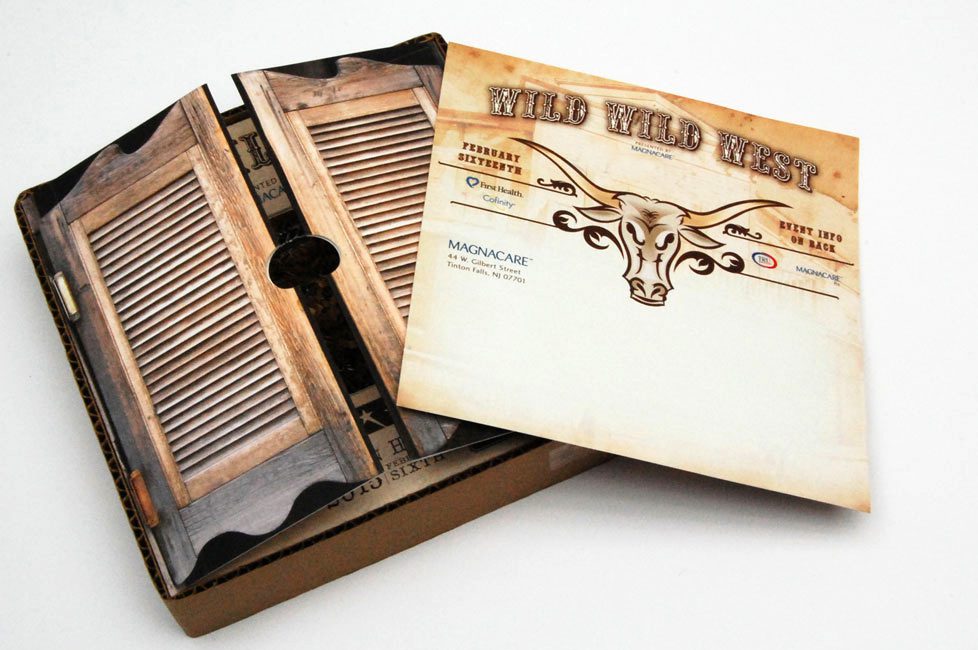
Direct Mail
Dimensional mailers are those that mail flat, then pop into 3D shapes when opened. Rather than announcing your new store opening with a standard direct mail postcard, for example, send your top customers an invitation that pops into the shape of a storefront. Promoting season tickets to your local concert venue? Rather than blasting out the usual email, send loyal patrons a 3D mailer with pullouts, flaps, and pockets that allow them to explore different areas of the venue interactively.
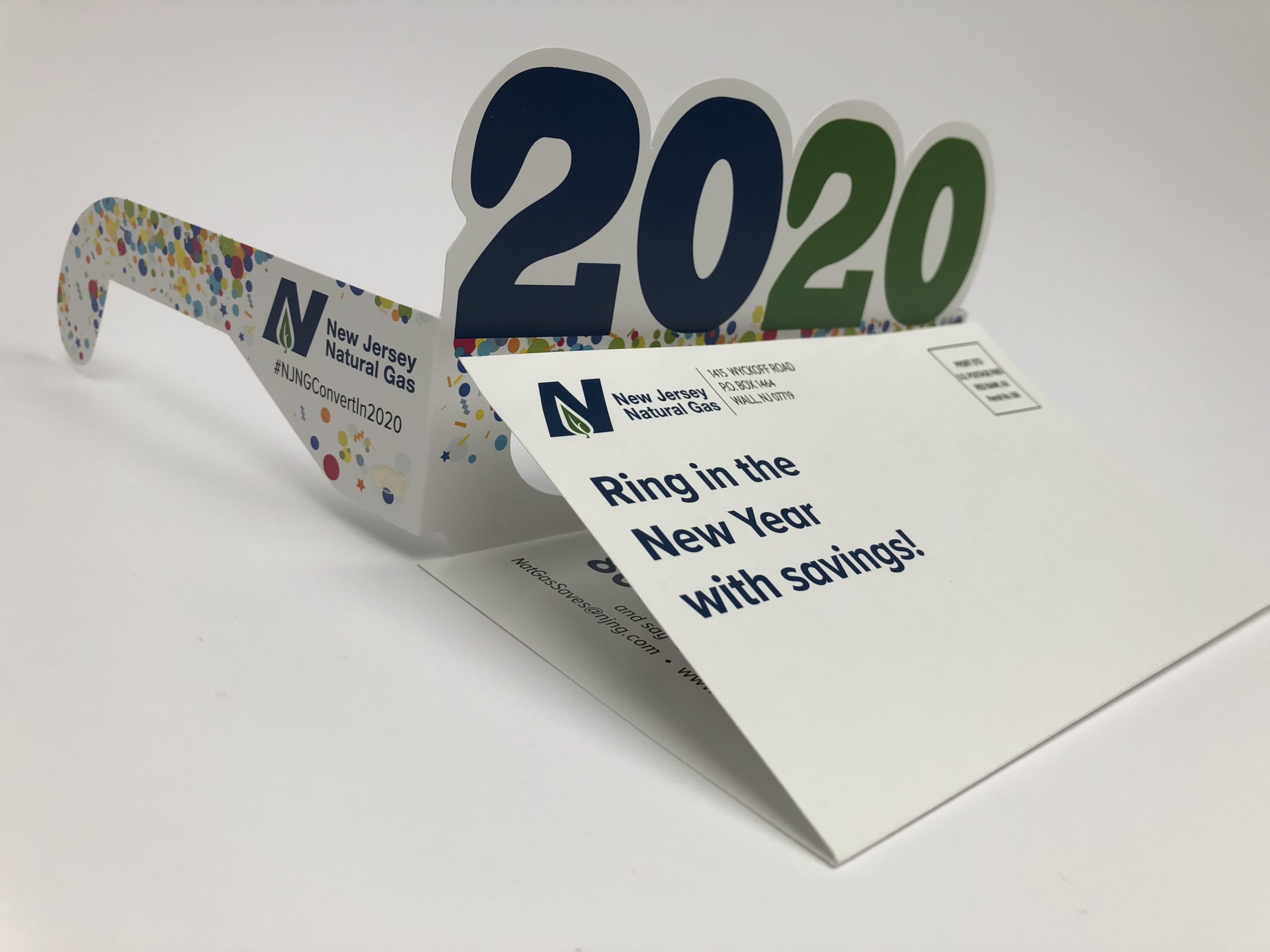
Invitations
Why should all invitations look the same? For the annual fundraiser, go all out. Instead of using the traditional letter to invite high-end donors to your annual black-tie event, deliver them a personalized ticket with metallic embossing in a luxurious box.
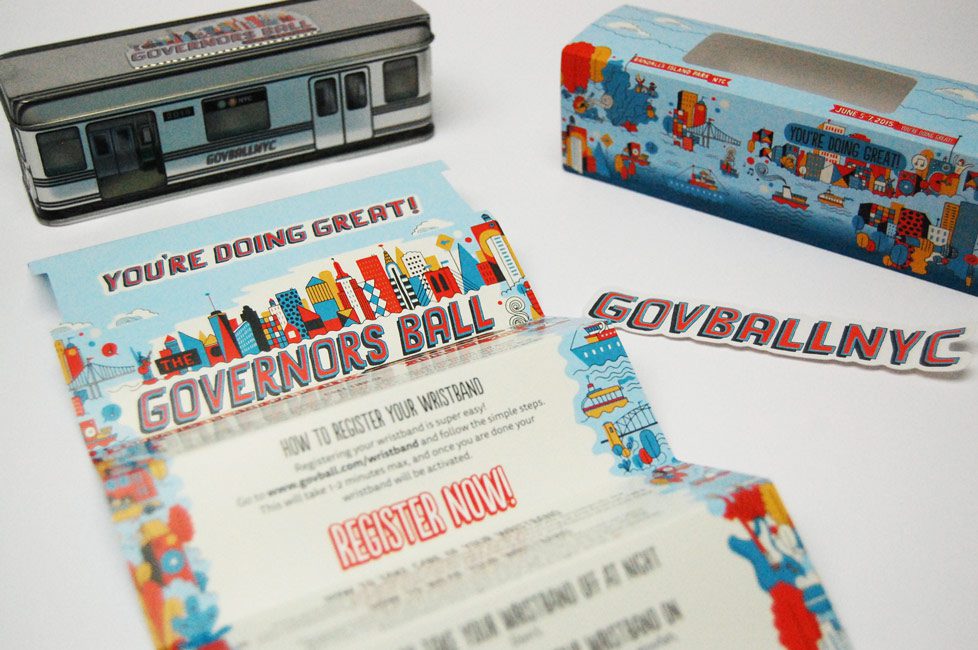
Table Tents
These highly visible marketing pieces are “can’t miss” in the center of a table. Whether it’s at a restaurant or corporate retreat, use table tents to promote products, services, or upcoming events. When those tables are filled with guests, you can make a huge impact!
Packaging
Who says packaging has to be a boring box? Develop a custom program for your influencers and best customers that includes product samples and promotional items to achieve a powerful unboxing experience.
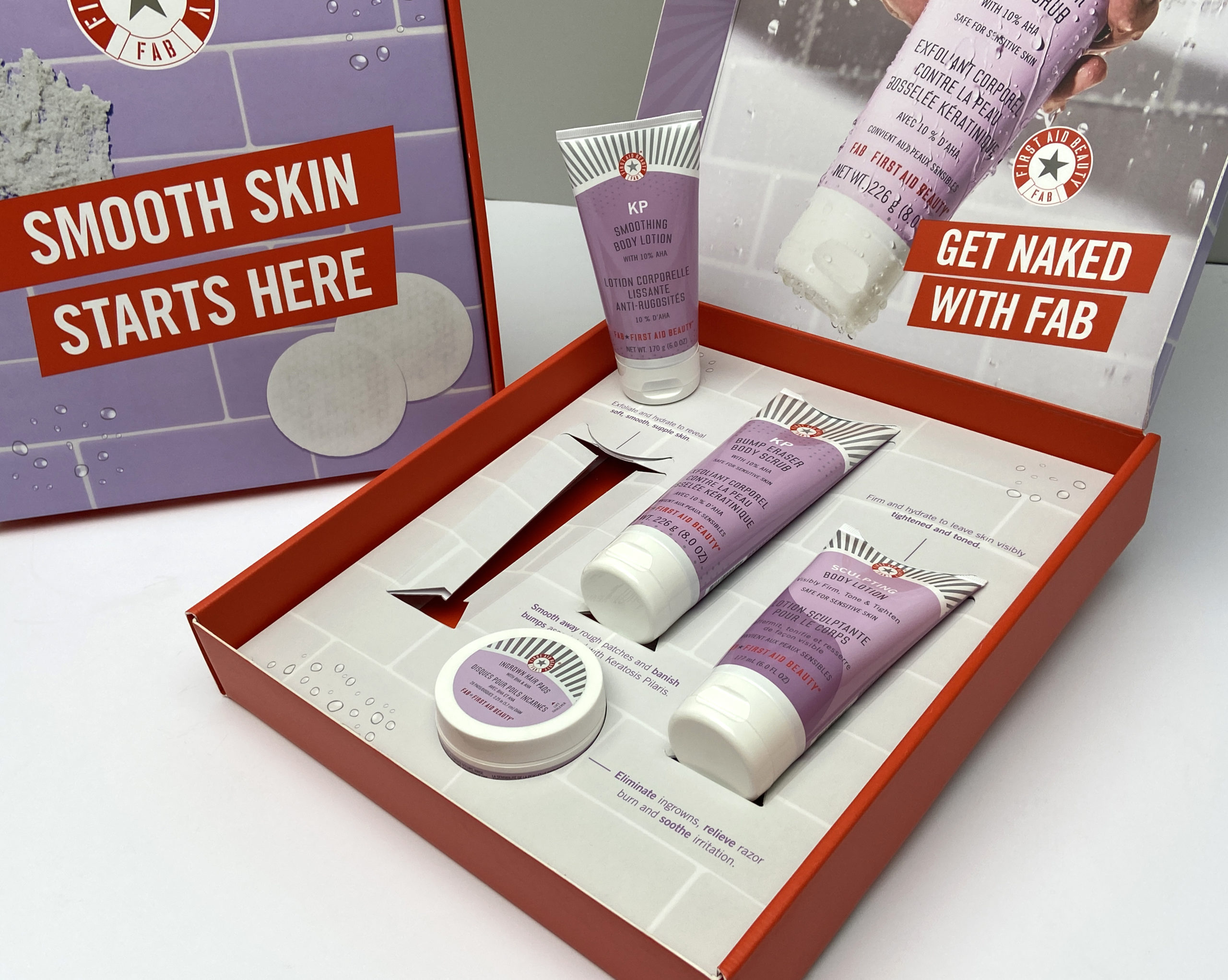
Cut-Outs
Sometimes marketing is serious, and other times you can engage your audience and build goodwill simply by letting people have fun. Create an element of whimsy with life-size cutouts of the boss, celebrities, or sports figures. Create openings for participants to peek through their faces and encourage them to take silly pictures and post them on social media.
Display Stands
Why spread marketing materials out on a flat table when you can create a one-of-a-kind display? 3D stands are lightweight and can be moved around as needed. They add a splash of color, an element of dimension, and attention-grabbing power.

Who says print marketing has to be flat or forgettable? Ready to get creative and discover the impact of going dimensional with your print? Contact our team today to get started.
Use these tactics to drive engagement, build trust, and deliver results with the power of direct mail.
The national direct mail database, Who’s Mailing What! (WMW!), recently analyzed its database of more than 130,000 mail pieces to find the strongest, most consistent direct mail trends over the past 20 years. Here’s the five most relevant trends that businesses can apply to their direct marketing strategy today.
#1. Postcards are on the Rise
Between 2009-2021, the number of postcards being mailed increased by approximately 20%, while self-mailers and envelopes declined slightly. And the United States Postal Service recently created an additional incentive to use First-Class Postcards by increasing the maximum size to 6 inches by 9 inches. This trend is in line with the next one, which is…

#2. Businesses are Using Less Copy
Over the past 20 years, WMW! found that the number of words used in direct mail pieces has declined on average by 62%. Direct mail is also using shorter sentences, more concise paragraphs, and bullet points to catch readers’ attention. Many campaigns have replaced text with images, charts, and graphics that provide quick, easy comprehension in today’s fast-paced world.
#3. Focus on Print-to-Digital
Whether marketers are engaging their audiences with QR Codes or driving them online to their websites or social media channels, the interaction between print and digital channels is sky-rocketing. The use of personalized URLs (PURLs), QR Codes and digital CTAs such as “follow us” or “visit our website” have doubled in the past four years.
#4. Sustainability Messaging is HOT
Buyers care about the environment, and they appreciate brands that show they care, too. The WMW! database was established 20 years ago, and of all the direct mail pieces that contain a sustainability message, 75% of them were in the last five years. The trend with sustainability awareness appears to only be growing in importance with consumers.
#5. Even Young Companies are Using Direct Mail
When WMW! looked at the age of the companies in the direct mail database, it found that the percentage of companies established in the 1980s, 1990s, 2000s, and 2010s was nearly identical. In fact, many of the (seemingly) online-only brands such as Uber, DoorDash and Google are using direct mail.

Although many people believed that direct mail would soon have been a thing of the past, it has remained strong, even in the digital age. Reasons being:
- Done right, it has a higher response rate than digital channels
- It reaches audiences that digital channels don’t
- Using unique paper, ink and finishing techniques – combined with print-to-digital tactics – even young companies can stand out from their older, more established competitors
The bottom line is that direct mail works! Factoring these 5 trends into your direct mail strategy can help you increase engagement with your audience and get the most out of this trusted marketing channel.
Not sure which direct mail option is best for your brand? Hatteras is proud to offer a wide variety of solutions including:
- Postcards & Self-Mailers
- Catalogues & Newsletters
- Interactive & Dimensional Mailers
- Product Sampling Mailers
- Influencer & Promotional Kits
- Trigger Mail Programs
- Integrated E-Comm Programs
Let Hatteras help you explore high-impact direct mail for your next marketing campaign. Contact our team today to get started.
Make a positive impact on the environment AND your budget thanks to the Circular Design model.
As you start planning your print marketing initiatives, there’s one big consideration for your business that can help you cut costs, reduce waste, and even help planet Earth!
“Circular Design” is based on the larger concept of the circular economy, which tackles global challenges like climate change, waste, and pollution by transitioning from a linear economy (make, use, dispose/waste) to a circular one (recycle, reuse, repurpose). This allows businesses and consumers to make the most of our natural resources and tackle these challenges together.
Love the idea? We do, too! Below are five elements of circular design that may lead you to look at your printed materials differently.

#1. Sourcing
Are your materials – whether paper, paperboard, or signage substrates – responsibly sourced? When it comes to paper-based substrates, do you know where and how the fiber was harvested? If the substrates are made from petroleum – are there other, more earth-friendly alternatives? For example, did you know there are paper-based options even for Outdoor signage that will still meet criteria for durability and weather-resistance? Starting your circular design strategy at sourcing will positively impact the rest of your business.#2. Production Processes
What type of presses are being used to print your projects?
Digital presses eliminate on-press chemistry and reduce environmental impact, but there are sustainable processes for offset printing, as well. Is your print provider using smart impositions and batching to minimize paper waste? Can you use soft (or online) proofing to eliminate the environmental impact of printing and physically delivering a hard-copy proof? It’s always a good idea to discuss the production processes and sustainable alternatives with your print partner.#3. Delivery
Once your materials are printed to reduce negative impacts on the planet, it’s time to consider if they’re being transported in an environmentally-friendly way. Whether you’re printing packaging or signage, you might want to consider using substrates that are lighter in weight to reduce not only the amount of materials used, but also the amount of fuel used to transport the products. This effort of “right-sizing” your print is good on the environment as well as your budget.
#4. Consumption
Another factor to consider is just how your materials are being used by consumers. Circular design takes into consideration things such as bulk packaging over single-use packaging to minimize the amount of product that needs to be recycled or that goes into a landfill.

#5. Recovery
The final piece to consider is what will happen to the products once they have been used. Choosing recyclable substrates is one thing, but encouraging (and making it easy for) consumers to recycle them is another. While many types of plastic signage, such as Coroplast, can be recycled, many people will simply put them in the trash. Where possible, consider using paper-based options or adding a recycling logo to let people know they can be recycled. Some companies encourage their customers not to recycle their packaging and other materials, but to compost them instead.By taking into consideration these five principles of Circular Design, you can go a long way toward designing print programs that are friendly to the earth. And, because they involve reducing waste, they can often save you money, too! As you move forward into 2022, reducing your business’ carbon footprint is not only an obtainable resolution, but one that future generations will thank you for.
Hatteras has made it a core mission to be ecologically responsible by providing high-quality, sustainable solutions to our clients and to the markets our clients serve. Let Hatteras help you explore sustainable options for your next project.Contact our team today to get started.You’ve probably heard about the many benefits of online storefronts. Or maybe you’ve heard of them as “e-commerce portals,” “branded portals,” or ”web-to-print portals.” Whatever you call them, these useful tools allow you to store, manage, and customize your print projects online.

Want to enable store managers to create their own promotions without compromising the brand? Offer online templates for signage, collateral and direct mail with all of the branded elements locked down.
Need to regularly update prices, swap-out images, or tweak the copy in catalogs and company literature? Ditch your warehoused inventory, keep products updated in real time, and print as you go – or, manage your print-on-demand and inventory items through one seamless experience.
Need 500 personalized copies of a product brochure? Order them on-demand without ever speaking to a salesperson or customer service rep.
REVIEW & REPORT
The print-on-demand benefits of these portals are endless. But there are other benefits, too, such as full visibility into inventory and ordering, that are less understood and under-utilized. With customizable reports, you can gain full visibility into which products are being ordered, when, and by whom. You can select monthly, quarterly, or annual reports, and you can get information in real-time, too.
With most online portals, you can access reports 24 hours a day, seven days a week, and even automate standard or customized reports so you receive them automatically in your inbox. Take advantage! Use the information to optimize your library and get the most out of the marketing materials that you have invested in.

MANAGE & MODIFY
For example, is there a brochure that is not moving? If so, this knowledge gives you the opportunity to ask why. Is it a new product that you haven’t promoted properly, so it isn’t being used because users do not realize it is there? Is it an old product that isn’t being used because it needs to be updated? Has the brochure become irrelevant? Does it simply need to be removed from the system?
Just because something is slow moving does not mean it needs to be removed, however. For some slow-moving sellers, you may simply want to move them to print-on-demand to free up warehousing space. Or, conversely, you may find that certain products are now selling like gangbusters, so you want to move them from POD to bulk prints to be picked and packed from the warehouse.
TRAIN & IMPROVE
You can also identify opportunities based on user behavior. Say you sell your products through distributors, and sales of several of the distributors are lagging. You check their order history and find that they order fewer marketing materials than other distributors. You set up a training session on how to use these materials, provide incentives for ordering them, and lo and behold! Sales start to increase.

Web-based portals can help companies and marketers simplify the print buying, tracking and fulfillment process, while providing a centralized collaboration tool for making smart, data-driven decisions.
Learn about Hatteras’ proprietary web-based portal, Navigator, or reach out to us at connect@hatteras.us.
When it comes to sustainability in packaging, there are a number of reasons why CPG brands should “go green” — from consumer perception, to reducing your carbon footprint.
More and more consumers are letting brands know that they care about the environment and choose products that align with their values. So, for consumer packaged goods manufacturers (CPG’s), it’s important to explore more sustainable solutions for your packaging (if you’re not already) in order to create a stronger connection with your audience — while minimizing your impact on the environment.

With research showing a shift towards a more environmentally-aware consumer market, below are four reasons why you should be introducing more sustainable elements into your brand packaging.
1. You get props for paper.Overwhelmingly, paper and cardboard are preferred by consumers because of their sustainability. Specifically, buyers see paper-based substrates as better for the environment (66%), easier to recycle (51%), and consumers also rate paper and paperboard tops for safety and ease of use. They also see paper as best for communicating product information and for creating a better brand image.
2. There is a shift away from plastics.Not only is there a preference for paper-based substrates, but there is movement away from plastic. More than half (57%) of consumers surveyed are actively taking steps to reduce their use of plastic packaging. More than one-third (36%) would avoid retailers not actively trying to reduce their use of non-recyclable plastic packaging.
3. Shipping matters.Buyers’ preference for paper and cardboard extends to shipping, as well. More than half (57%) want their products to be delivered in paper packaging rather than plastic. Choose boxes with branded labels over envelopes and make sure that the box is fitted properly. Seventy percent of buyers prefer products to be delivered in packaging that is “right sized” for the product(s) inside.

Sustainable packing is a great starting point, but purchasing from sustainable sources is an excellent way to make your company “greener!” Most buyers are familiar with at least one of the following environmental labels: Sustainable Forestry Initiative (SFI), 54%; Forest Stewardship Council (FSC), 45%; and Programme for the Endorsement of Forest Certification (PEFC), 42%. The well-known “recycling” symbol (“the Mobius Loop”) is recognized by 90% of consumers and is rated as being the most important.
The bottom line is that consumers are becoming more environmentally-aware and expressing a preference towards more sustainable products. Luckily for brands that can utilize paper for their packaging, there’s many ways to incorporate sustainable elements into your packaging while demonstrating your commitment to the environment.
Source: Data taken from “U.S. Packaging Preferences 2020” (Two Sides North America)
********
Hatteras has made it a core mission to be ecologically responsible by providing high-quality, sustainable solutions to our clients and to the markets our clients serve. Let Hatteras help you explore sustainable options for your next print project. Contact our team today to get started. .Looking to provide consumers with a safe, easy way to connect to your brand or marketing information in a mobile environment? We’ll show you how to use QR codes to create a seamless, multi-channel brand experience right from your printed pieces.
The Resurgence of QR Codes
From retail graphics to packaging and a myriad of print formats in between — QR Codes (or Quick Response Codes) are shortcuts that can be used to seamlessly connect consumers from printed materials to digital media. QR codes have been around for many years, but the COVID-19 pandemic created a big resurgence. Businesses from major retailers and event venues to local coffee bars increased the use of QR codes to provide an easy — and touchless — way to engage with their customers, and those benefits will last long after the pandemic is over.
In the past, people would need to download a QR code reader to their phones in order to scan them (and those with older phones may still need to do so). But today, most newer mobile phones have QR code readers built in, making the process easy which is probably the reason why adoption of QR codes was so strong during the pandemic.
To use QR codes, consumers simply open the camera app on their smartphones, point the camera at the code, and the camera’s browser will instantly recognize the code and take them to a website. What was once a static, printed medium suddenly becomes a dynamic, interactive one for consumers!
The Benefits for Using QR Codes
One of the reasons QR codes can be so impactful is that they capture viewers at the very moment of interest. As soon as consumers’ attention is piqued, they can act on the information right away. And the best part is that you don’t lose eyeballs by asking people to manually input URLs or scribble them down onto a piece of paper that might get lost. The experience is seamless.
Since QR codes bring consumers directly to websites, they provide an easy way to track interest level and conversions among mobile audiences. How many people scanned the code in the brochure you mailed out after the virtual trade show? Were mobile users more likely to respond to your promotion from the local newspaper or regional lifestyle magazine? Do people really pay attention to window clings? With QR codes added, more of your printed materials can now be used as powerful marketing tools for driving digital engagement and possibly even sales.
QR Code Uses for the Everyday Consumer
The beauty of QR codes is that they can be used at any point in the consumer journey. Below are just a few examples of how your brand can connect with consumers with the use of QR codes:
Direct Mail – Whether included in postcards, newsletters, promotional kits or other forms of direct mail marketing — users can transition from a tangible touchpoint directly to a digital destination. For example, realtors can send people postcards with QR codes that link them to virtual tours of specific homes in their area. Outdoor & Event Graphics – Whether used at a trade show or in out-of-home advertising, QR codes can be included in your graphics to direct consumers to learn more about your brand, to claim a discount, to contact your business, or to simply enhance the visual experience. Packaging – Your brand’s packaging should aim to create a positive first impression with a consumer. But when paired with a QR code, you’re able to expand on your brand story by sharing more details about your product, how it’s sourced, or other values and offerings. For example, a beauty brand may want to show a video of how their products are cruelty-free and safely-made, while a spirits brand may want to provide a holiday cocktail recipe. By easily providing ways for consumers to engage and interact, they’re more likely to have a positive experience and build a lasting relationship with your brand.
Getting Started with QR Codes
QR codes offer marketers an additional way to engage with consumers, while seamlessly bridging the gap between print and digital mediums. Let Team Hatteras help you make the most of your print-based marketing.
Contact us today to get started.It’s been over two years since the Graphic Arts Association (GAA) held its annual Neographics Awards Ceremony, with the COVID-19 pandemic disrupting its regular 2020 schedule. But the GAA came back strong this year, hosting a ‘spooktacular’ event in which Hatteras won ‘Best in Category’ (Presentation Kits) for its submission of the De La Viuda® Hot Sauce Sampling and Influencer Kit.

The announcement was made on October 14, 2021 during the GAA’s Neographics Awards Ceremony held at the Cescaphe Ballroom in Philadelphia, where hundreds of printing and graphic arts professionals assembled to represent some of their best work from 2020 and 2021.


* * * * * *
For nearly 40 years, Hatteras has been helping companies communicate their brand story through the power of print.
Let us help you communicate your brand story.
Designed & Developed by Netwave Interactive